Christmas Light Clips Types (Complete Buying Guide)
When it comes to hanging Christmas lights, the bulbs get all the glory—but the real MVPs are the little clips that hold everything in place. At DFW Christmas Light Installs, we’ve hung miles of lights across Watauga and beyond, and we can tell you that choosing the right Christmas light clips types makes the difference between a display that lasts all season and one that comes crashing down after the first cold snap.
In this complete buying guide, we’ll break down every type of clip out there—what they’re made of, which bulbs they work with, and how to install them without damaging your roof or gutters. Whether you’re a DIY homeowner or just curious about how the pros do it, this guide has you covered.
What Are the Different Types of Christmas Light Clips?
Christmas light clips come in more varieties than most people realize. Each one is designed for a specific mounting surface or bulb style. Picking the WRONG clip is the number one reason we see homeowners struggling with sagging lines and lights that pop off in the wind. Here in North Texas, we deal with everything from gusty fronts to sudden ice—so the clip you choose really matters.
Here are the most common types of Christmas light clips you’ll run into:
- Shingle tab clips — Slide under your roof shingles and grip the edge. Great for outlining a roofline.
- Gutter clips — Hook over the lip of your gutter to hold lights along the eaves.
- All-in-one clips — Versatile clips that work on BOTH shingles and gutters (our favorite for mixed rooflines).
- Ridge clips — Designed to sit along the peak or ridge of a roof.
- Parapet clips — Used on flat commercial rooftops and brick edges.
- Brick clips — Clip onto brick or stone without adhesive or nails.
- Adhesive clips — Stick to surfaces like siding, windows, or trim (best for indoor or light-duty use).
- C7 and C9 bulb clips — Sized specifically to hold larger retro-style bulbs upright.
- Mini light clips — Tiny clips built for strands of mini or fairy lights.
How Do You Choose the Right Light Clips for Your Roof and Gutters?
The right clip depends on ONE big thing—what surface you’re attaching to. A lot of folks buy a giant pack of clips only to realize they don’t fit their gutters or won’t grab their shingles. Before you buy, walk around your home and take note of where you want lights and what those areas are made of. Here’s how we think about it.
Consider Your Roofline Material
Asphalt shingles? Go with shingle tab clips—they slide right under the shingle edge and hold firm. Metal roofs and tile roofs are trickier and may need magnetic or adhesive options. Always match the clip to the material so you don’t damage anything.
Check Your Gutter Style
Not all gutters are the same. Standard K-style gutters work great with universal gutter clips. But if you have a thick lip or a covered gutter guard, you’ll want a clip designed to accommodate that extra width. Measure the gutter lip if you’re unsure.
Think About Wind and Weather
Around Fort Worth and Arlington, wind is no joke. If you live in an exposed area, choose clips that lock or grip TIGHTLY rather than loose hook styles. A clip that holds the wire snugly will save you a lot of headaches (and ladder trips) mid-December.
Match the Clip to the Bulb
If you’re using big C9 bulbs, don’t grab mini clips—they won’t hold the weight or keep the bulbs pointed the right way. We’ll dig into bulb-specific clips in the next section, but always factor this in before purchasing.
Which Christmas Light Clips Work Best for Different Bulb Types?
Different bulbs need different support. A clip that works perfectly for delicate mini lights might completely fail with heavy commercial bulbs. Here’s how to pair clips with the most popular bulb types—this is the exact logic we follow on every job.
- Mini Lights — Use small, lightweight mini light clips or all-in-one clips. These strands are light, so almost any clip works, but dedicated mini clips keep the wire tidy.
- C7 Bulbs — Choose C7-specific clips that cradle the base and keep bulbs facing UP. These are common for residential rooflines and windows.
- C9 Bulbs — Go with C9 clips (slightly larger than C7). They hold the bigger bulbs securely and prevent drooping along long runs.
- Icicle Lights — Standard gutter or shingle clips work fine since the dangling strands hang below. Space clips evenly for a clean icicle look.
- Rope Lights — Use rope light clips or channel mounts. Regular bulb clips won’t grip the round tubing correctly.
- Net Lights — Skip clips for the grid itself; use a few all-in-one clips just to anchor the edges to your roofline or bushes.
- Permanent LED Lights — These often come with their own track or clip system that mounts once and stays year-round (more on that below).
What Materials Are Christmas Light Clips Made From?
The material a clip is made of tells you a lot about how it’ll perform. Cheap clips crack in the cold—and North Texas winters can get cold enough to make brittle plastic snap. Here’s a look at the most common materials and when to use each.
Plastic Clips
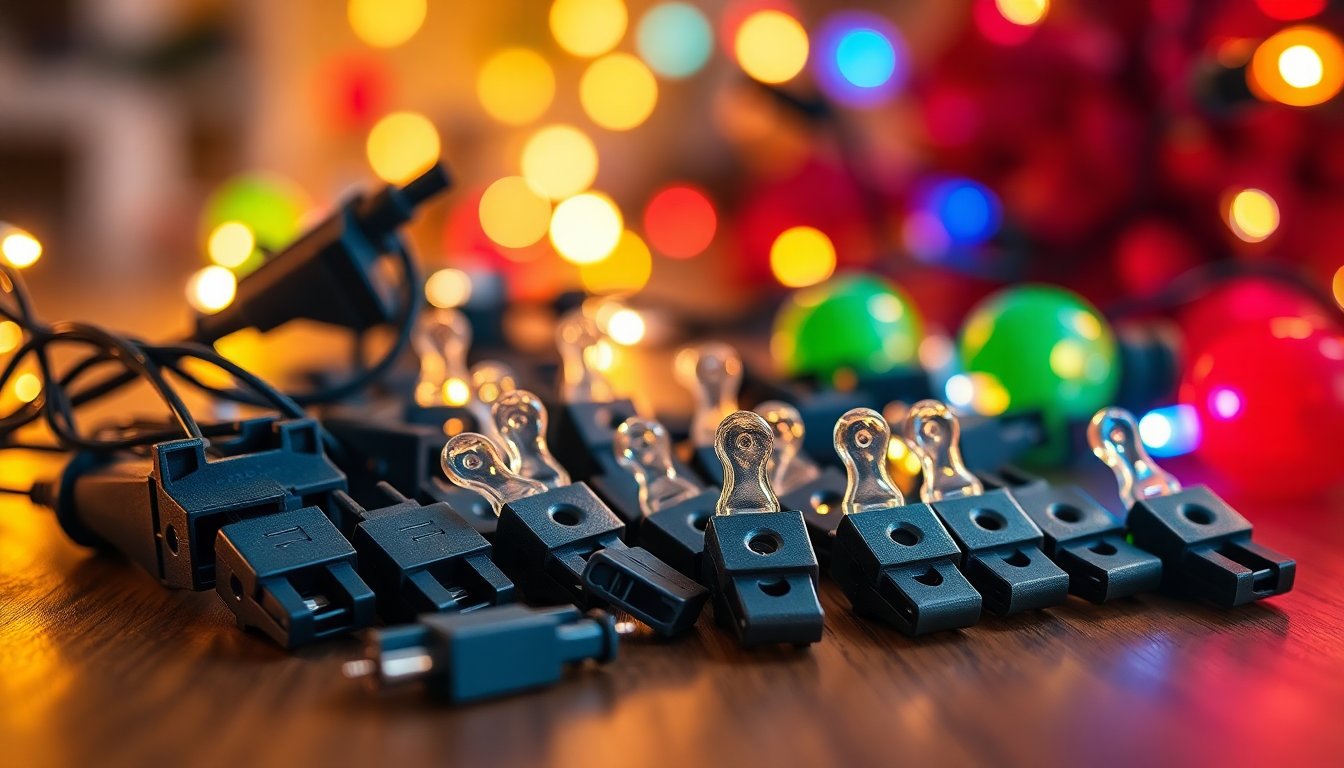
By far the most common. Affordable, lightweight, and easy to install. The BEST plastic clips are made from UV-resistant materials that won’t yellow or turn brittle after sun exposure. Cheaper versions can crack in freezing temps, so quality matters here.
Nylon Clips
A step up from basic plastic. Nylon is more flexible and holds its grip better in cold weather. These are a solid choice for anyone who wants durability without spending a fortune.
Metal Clips
Strong and long-lasting, metal clips (often used on commercial jobs) resist heat and cold like champs. The downside? They can scratch surfaces and may rust over time if they’re not coated. We use these mostly on flat commercial roofs and parapet walls.
Silicone and Rubber Clips
Great for adhesive-style mounts and window applications. They stay flexible in cold weather and grip smooth surfaces well. Not ideal for heavy-duty rooflines, but perfect for accents and indoor displays.
How Do You Install Christmas Light Clips?
Installing clips isn’t complicated—but doing it RIGHT (and safely) is what separates a great display from a frustrating mess. Whether you’re working on a single-story home in Hurst or a two-story property in Colleyville, the basic process is the same. Here’s how we do it step by step.
- Plan your layout first. Walk the perimeter and decide exactly where lights will go. Measure your rooflines and gutters so you buy enough clips (get extras—you’ll want them).
- Attach clips to the light strand OR the roof first. For long runs, we usually clip the lights onto the strand, then attach the whole thing. For short runs, mount clips first.
- Start at a power source. Begin near an outlet or extension cord location so you’re not stretching cords awkwardly across the roof.
- Slide shingle clips under the shingle edge. Push gently until the clip grips. Don’t force it—you don’t want to lift or crack shingles.
- Hook gutter clips over the lip. Make sure each clip snaps or seats firmly on the gutter edge.
- Space clips evenly. About every 12 inches keeps lights straight and prevents sagging. Tighter spacing gives a cleaner look.
- Keep bulbs facing the right direction. For C7 and C9 bulbs, make sure they point UP or outward for the best visual effect.
- Test everything before you finish. Plug in and check for dead sections while you’re still on the ladder. Fixing it now beats climbing back up later.
- Use a ladder safely. Have a spotter, keep three points of contact, and NEVER overreach. If your roof is steep or high, this is where hiring a pro really pays off.
If ladders and steep rooflines aren’t your thing, that’s exactly what we’re here for. Our team handles residential Christmas light installation throughout Watauga, Euless, Richland Hills, and the surrounding areas—so you can enjoy the season without the risk.
Which Christmas Light Clips Are the Best Value for Money?
Value isn’t just about the cheapest price—it’s about how long the clips last and how well they hold up. A $5 pack that cracks after one season is NOT a bargain. Here’s how we rank the best value clips based on years of real-world use across the DFW area.
- All-in-one clips — Best overall value. They work on shingles AND gutters, so you buy ONE type instead of several. Fewer clips to stock, fewer headaches.
- UV-resistant nylon clips — Slightly pricier upfront, but they last multiple seasons without cracking. Cost-per-use is excellent.
- Bulk plastic shingle clips — Cheapest option and fine for occasional use. Just buy quality brands to avoid brittle failures.
- C9/C7 combo clip packs — Great value if you’re doing a mixed bulb display. Buying a combo pack beats buying separate boxes.
- Permanent lighting clip systems — Highest upfront cost, but you install ONCE and never climb a ladder again. For long-term value, nothing beats it.
Speaking of permanent options—many of our clients in Fort Worth and Dallas are switching to permanent holiday lighting that stays mounted all year and works for every holiday, not just Christmas. It’s a bigger investment, but the value over time is hard to beat. And if you want a display that dances to music, our synchronized Christmas lighting takes things to a whole new level.
Conclusion
Choosing the right Christmas light clips comes down to three things—your mounting surface, your bulb type, and the material quality. Shingle clips grip your roofline, gutter clips hook your eaves, and all-in-one clips do both. Match the clip to your bulbs (C7, C9, or mini), pick UV-resistant materials that survive Texas weather, and space them about every 12 inches for that clean, professional look.
Whether you tackle it yourself or leave the ladder work to the pros, the right clips will keep your display shining bright all season long. If you’d rather skip the hassle entirely, our team at DFW Christmas Light Installs proudly serves Watauga, Hurst, Euless, Richland Hills, Colleyville, Fort Worth, Arlington, and Dallas—ready to light up your home or business the RIGHT way. Reach out today and let’s make this holiday season your brightest yet!