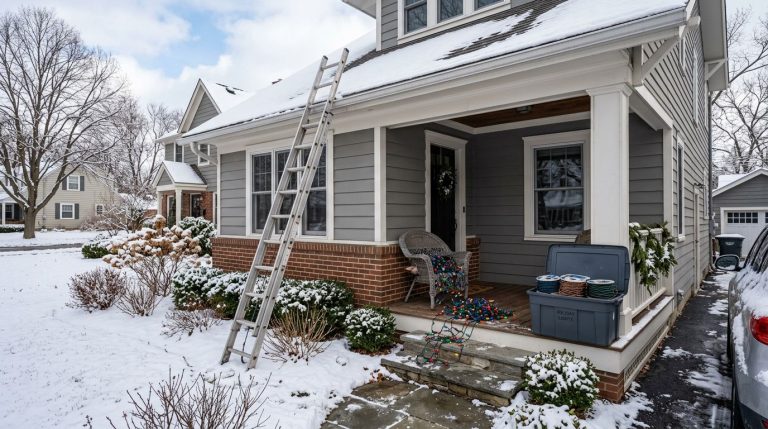
christmas light installation height safety
Every holiday season, thousands of homeowners climb ladders to string up festive lights, and every year, emergency rooms fill up with folks who took a nasty fall. That’s why Christmas light installation height safety should be at the top of your mind before you ever step onto that first rung. At DFW Christmas Light Installs in Watauga, we’ve hung lights on countless homes and businesses across North Texas, and we’ve learned exactly what it takes to stay safe while getting that perfect glow.
In this guide, we’re sharing the real safety knowledge we use on every job. Whether you’re planning to tackle the project yourself or just want to understand what makes the work risky, this article will help you make smart, safe decisions this holiday season.
What Are the Main Height Safety Risks of Christmas Light Installation
Hanging lights sounds simple until you’re 15 feet in the air holding a strand in one hand and a clip in the other. The truth is, working at height introduces a whole set of dangers that most people underestimate. Falls from ladders and roofs are among the most common holiday injuries, and they can be SERIOUS. Broken bones, head injuries, and worse happen every single December.
Here in the Dallas-Fort Worth area, weather adds another layer of risk. Cold mornings leave frost on roofs. Sudden gusts of wind can throw off your balance. And electrical hazards are always lurking when you mix water, lights, and outdoor outlets.
- Falls from ladders caused by unstable footing or overreaching
- Roof slips especially on steep or wet surfaces
- Electrical shock from damaged cords or wet connections
- Overhead power lines that can be deadly if a ladder contacts them
- Falling objects like tools or light strands hitting people below
- Fatigue and rushing that lead to careless mistakes
- Poor weather including ice, wind, and low visibility
Knowing these risks is the first step. Respecting them is what keeps you safe. If you want a deeper look at safe practices, our team put together a full Christmas light safety guide that covers everything from prep to takedown.
How to Choose the Right Ladder for Hanging Christmas Lights
Your ladder is your lifeline. Picking the wrong one is one of the biggest mistakes we see homeowners make. A too-short ladder tempts you to overreach. A wobbly one puts you off balance. And the wrong material can turn a shock into a tragedy. Take a few minutes to choose correctly before you climb.
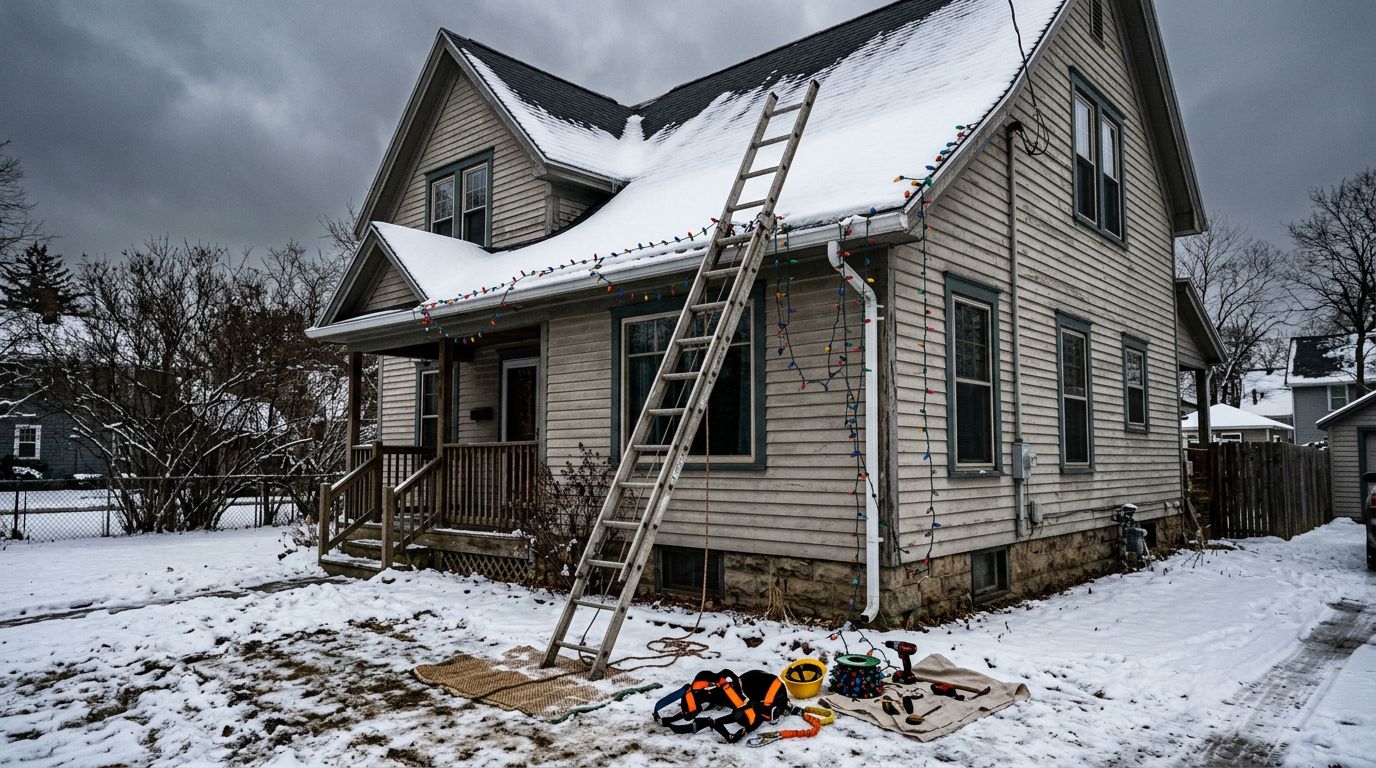
- Match the height to the job. Your ladder should extend at least three feet above the roofline you’re accessing. Never stand on the top two rungs.
- Choose fiberglass over aluminum. Fiberglass does not conduct electricity, which matters a lot when you’re near power lines and outlets.
- Check the weight rating. Account for your body weight PLUS your tools and light strands. A Type IA ladder handles up to 300 pounds.
- Inspect before every use. Look for cracks, loose bolts, bent rungs, and worn feet. A damaged ladder is a no-go.
- Pick the right style. Extension ladders work best for roofs, while step ladders suit lower eaves and bushes.
- Make sure the feet grip. Rubber, non-slip feet keep the base planted on driveways and patios.
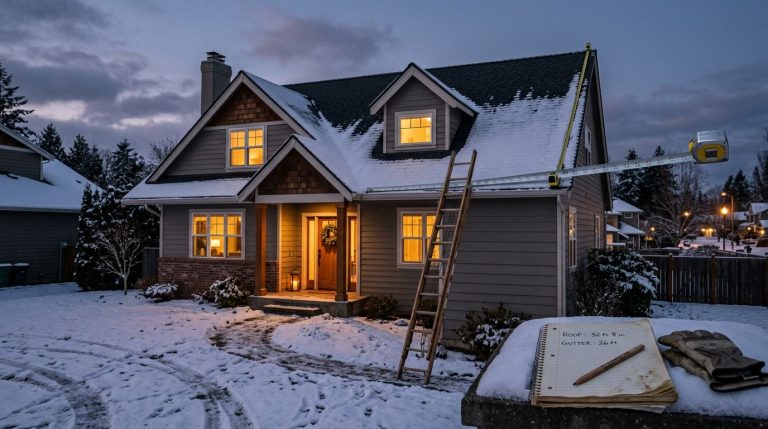
Once you’ve got the right ladder, always set it on firm, level ground. Use the 4-to-1 rule: for every four feet of height, move the base one foot away from the wall. That angle keeps you stable.
Essential Safety Equipment for Working at Height
A ladder alone isn’t enough. Professionals rely on gear that reduces the chance of a fall and limits injury if something goes wrong. Here’s what we consider non-negotiable when working up high.
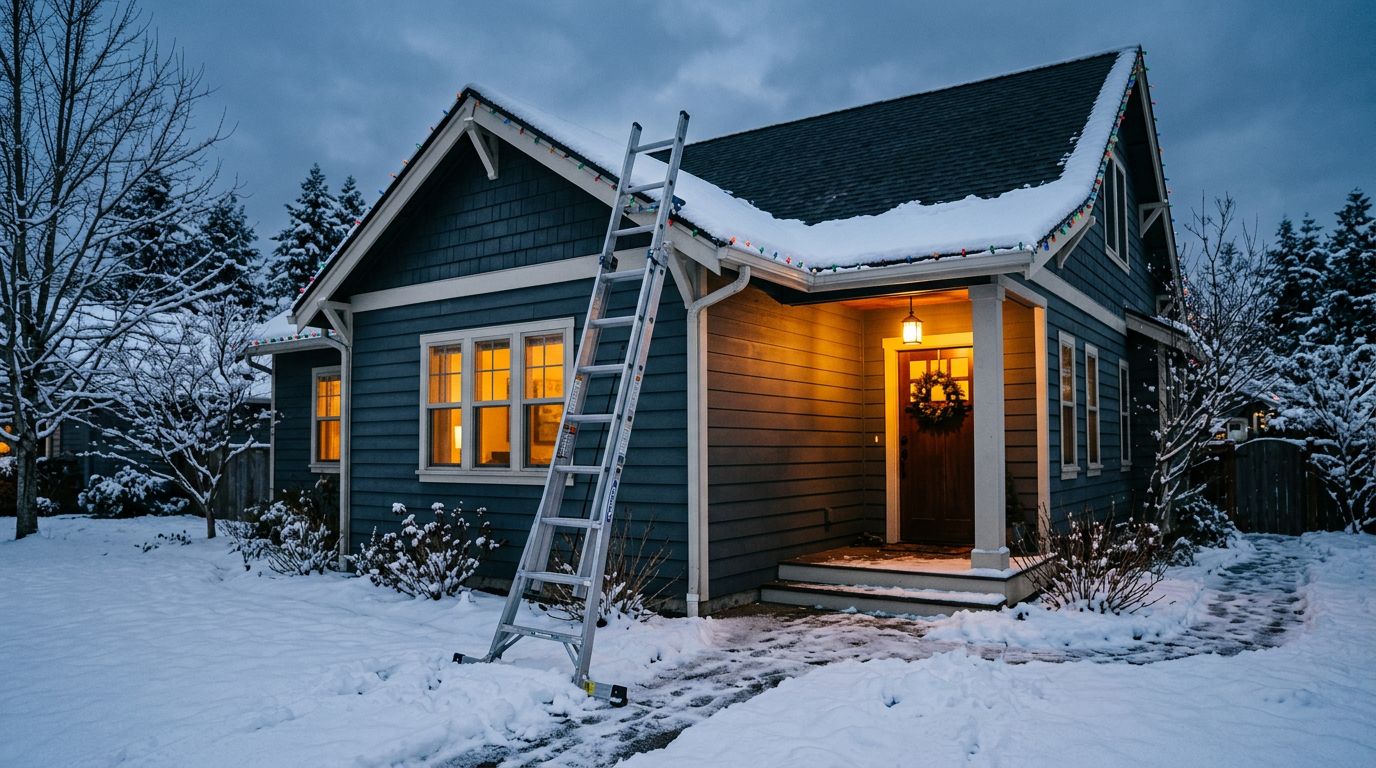
Fall Protection Harness
For any work on a roof, a full-body harness connected to a secure anchor point is a game changer. If you slip, the harness catches you before you hit the ground. This is standard equipment on our jobs and it should be for anyone spending real time on a roof.
Non-Slip Footwear
Shoes with soft rubber soles and deep tread give you grip on shingles and ladder rungs. Skip the smooth-soled sneakers and never work in wet socks or slippery boots.
Work Gloves
Good gloves protect your hands from cold, sharp clips, and rough roofing materials. Just make sure they still let you grip the ladder firmly. Bulky gloves can actually make you less safe.
Stabilizers and Standoffs
A ladder stabilizer spreads the contact points and keeps the ladder from tipping sideways. It also protects your gutters from getting crushed. These attach to the top of an extension ladder.
Head Protection
A hard hat feels like overkill for holiday lights, but falling tools and unexpected bumps happen. For commercial jobs especially, we treat head protection as essential.
A Reliable Spotter
Never underestimate a second set of hands. A spotter holds the ladder steady, hands you supplies, and calls for help if something goes wrong. Working alone at height is a risk you don’t need to take.
Step-by-Step Guide to Safely Installing Lights on High Areas
Now let’s walk through the actual process. Rushing is what gets people hurt, so slow down and follow each step. The goal is to keep at least three points of contact with the ladder at all times and to plan your movements before you climb.
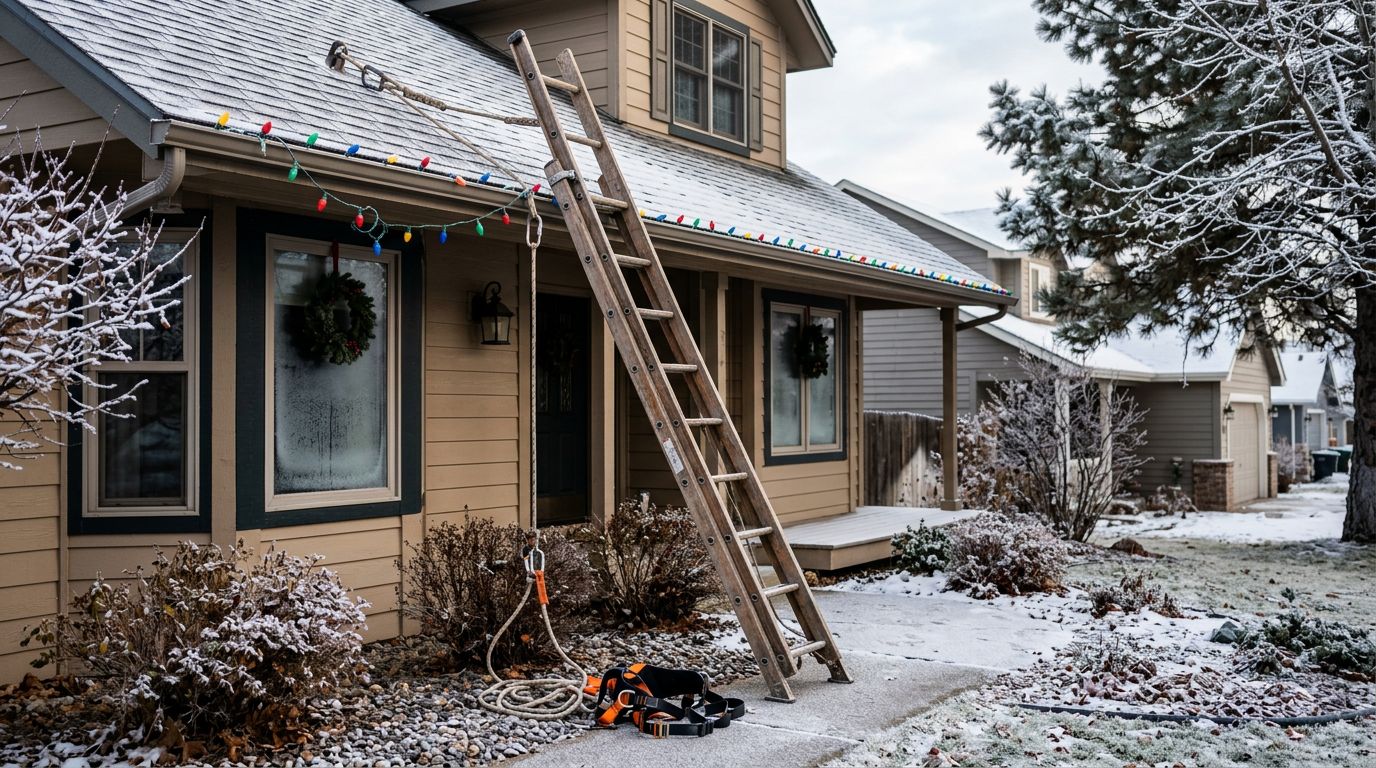
- Check the weather. Pick a dry, calm day. Never work in wind, rain, or when frost is on the roof.
- Prep your lights on the ground. Test every strand, untangle cords, and attach clips before you climb. This limits your time up high.
- Set up your ladder properly. Place it on level ground, use the 4-to-1 angle, and have your spotter hold the base.
- Climb with both hands free. Use a tool belt or a bucket on a rope to haul lights up instead of carrying them by hand.
- Work within your reach. Don’t stretch sideways. Climb down and move the ladder instead. Overreaching is a top cause of falls.
- Attach lights section by section. Secure each part before moving on. Use plastic clips, not staples or nails that damage wires.
- Keep cords away from walkways. Route extension cords so nobody trips and so they stay dry.
- Plug in and test from the ground. Once everything is hung, do a final check for hot spots or flickering.
Steep rooflines deserve extra caution because they leave almost no margin for error. If your home has a sharp pitch, our advice on steep roof Christmas light installation explains why these jobs are best left to trained crews with the right anchoring gear.
When Should You Hire a Professional Christmas Light Installer
There’s no shame in calling in the pros. In fact, it’s often the smartest and safest choice. Some homes and situations simply carry too much risk for a DIY approach. We serve homeowners and businesses all across Watauga, Hurst, Euless, Richland Hills, Colleyville, Fort Worth, Arlington, and Dallas, and we handle the jobs most people should never attempt alone.
Here are clear signs it’s time to hand the ladder over to someone who does this every day.
- Your home is two stories or taller with high peaks and hard-to-reach eaves
- You have a steep or complex roofline that’s hard to stand on
- There are power lines near the areas you want to light
- You want synchronized or permanent lighting that requires specialized skill
- You don’t own proper safety equipment like harnesses and stabilizers
- You have limited mobility or feel uneasy on ladders
- You simply don’t have the time to do the job safely and correctly
Wondering if the cost is justified? We break down the value in our article on whether professional Christmas lights are worth it, covering everything from safety to the finished look. For most people, the peace of mind alone makes it worthwhile.
Common Height Safety Mistakes to Avoid During Installation
Even careful people slip into bad habits when they’re in a hurry or trying to finish before dark. We’ve seen these mistakes lead to close calls and real injuries. Avoid them and you’ll dramatically lower your risk this holiday season.
- Overreaching from the ladder. That extra stretch to save a trip down is how most falls happen. Move the ladder instead.
- Using a damaged or wrong-size ladder. Always inspect first and match the ladder to the height.
- Working alone. No spotter means no one to steady the ladder or call for help.
- Ignoring the weather. Wet, icy, or windy conditions turn a routine job into a hazard.
- Standing on the top rungs. The top two steps are never meant for standing.
- Skipping proper footwear. Smooth soles on shingles are asking for trouble.
- Using staples or nails on wires. This damages insulation and creates shock and fire risks. Use clips.
- Overloading outlets. Too many strands on one circuit can overheat and start fires.
- Rushing the takedown. Removal is just as risky as installation. Take the same care coming down as you did going up.
Little details add up. A steady base, dry conditions, and a patient pace prevent the vast majority of accidents.
Conclusion
Christmas light installation height safety comes down to preparation, the right equipment, and knowing your limits. Choose a proper fiberglass ladder, wear non-slip shoes, use fall protection on roofs, and never work alone or in bad weather. Avoid overreaching and always keep three points of contact. These simple habits keep the holidays merry instead of memorable for the wrong reasons.
If your home has a tall or steep roof, or you’d simply rather skip the risk, our experienced crew at DFW Christmas Light Installs is ready to light up your property safely and beautifully across the Watauga and greater Dallas-Fort Worth area. Let us bring the sparkle while you stay safely on the ground this season.