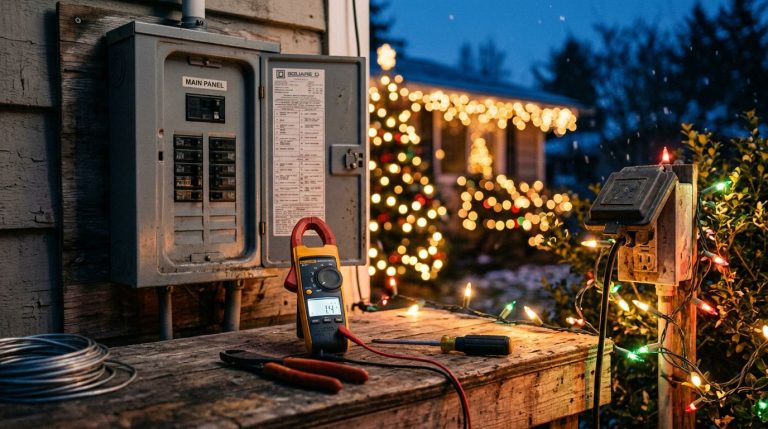
Christmas Light Installation Ladder Safety (Essential Tips 2026)
Every holiday season, thousands of homeowners climb a ladder to hang Christmas lights and hope for the best. Sadly, ladder falls are one of the most common injuries during December. That is why Christmas light installation ladder safety should be the FIRST thing on your mind before you plug in a single strand.
Here at DFW Christmas Light Installs in Watauga, we hang lights for a living. We have seen what goes wrong when people rush the job. In this guide, we will share the essential tips to keep you safe on the ladder this year so your holiday stays merry and injury free.
What Type of Ladder Is Best for Hanging Christmas Lights
Not every ladder belongs on a Christmas light job. The wrong ladder can wobble, sink into soft ground, or leave you reaching too far. Picking the RIGHT ladder is half the safety battle. For most single story homes, a sturdy extension ladder or a tall step ladder works well. For two story houses, you need something taller and rated for the weight you plan to put on it.
Here are the ladder types we recommend and what to look for:
- Fiberglass ladders – These do not conduct electricity, which matters a lot when you work around power lines and light strings.
- Extension ladders – Best for reaching gutters and roof lines on taller homes. Always extend at least three feet above the roof edge.
- Step ladders – Great for bushes, low eaves, and porch columns. Never stand on the top two rungs.
- Duty rating Type IA or IAA – These handle 300 to 375 pounds. That covers you PLUS your tools and light strings.
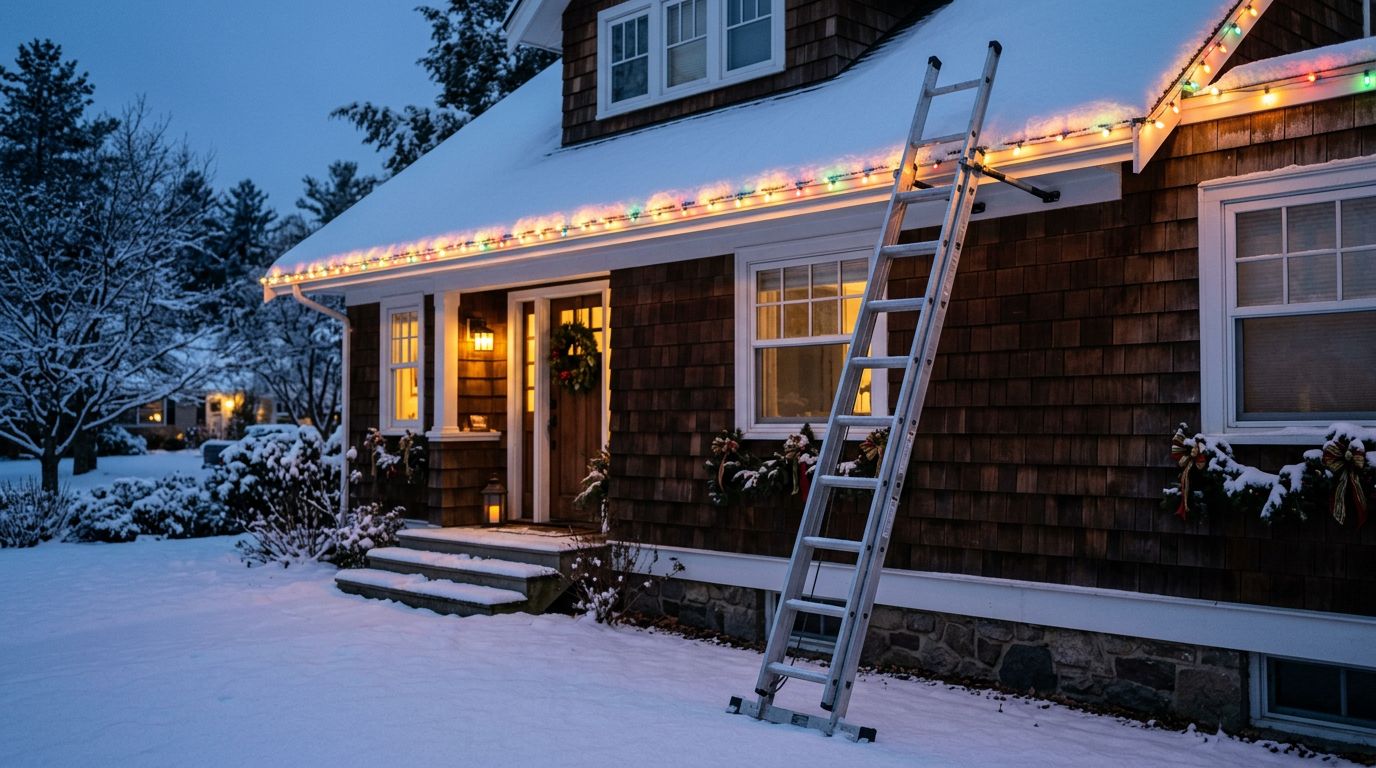
- Ladders with stabilizer bars – A stabilizer or standoff arm keeps the ladder off the gutters and adds serious stability.
Avoid old aluminum ladders near electrical work. And skip any ladder with loose rungs or bent feet. If it feels sketchy on the ground, it will feel worse fifteen feet up.
How to Set Up a Ladder Safely for Christmas Light Installation
Setting up your ladder correctly takes about two minutes. Those two minutes can prevent a fall that changes your whole season. Follow a clear process every single time, even when you are in a hurry. Rushing the setup is where most accidents begin. Our full Christmas light installation safety guide goes deeper, but here is the core setup routine.
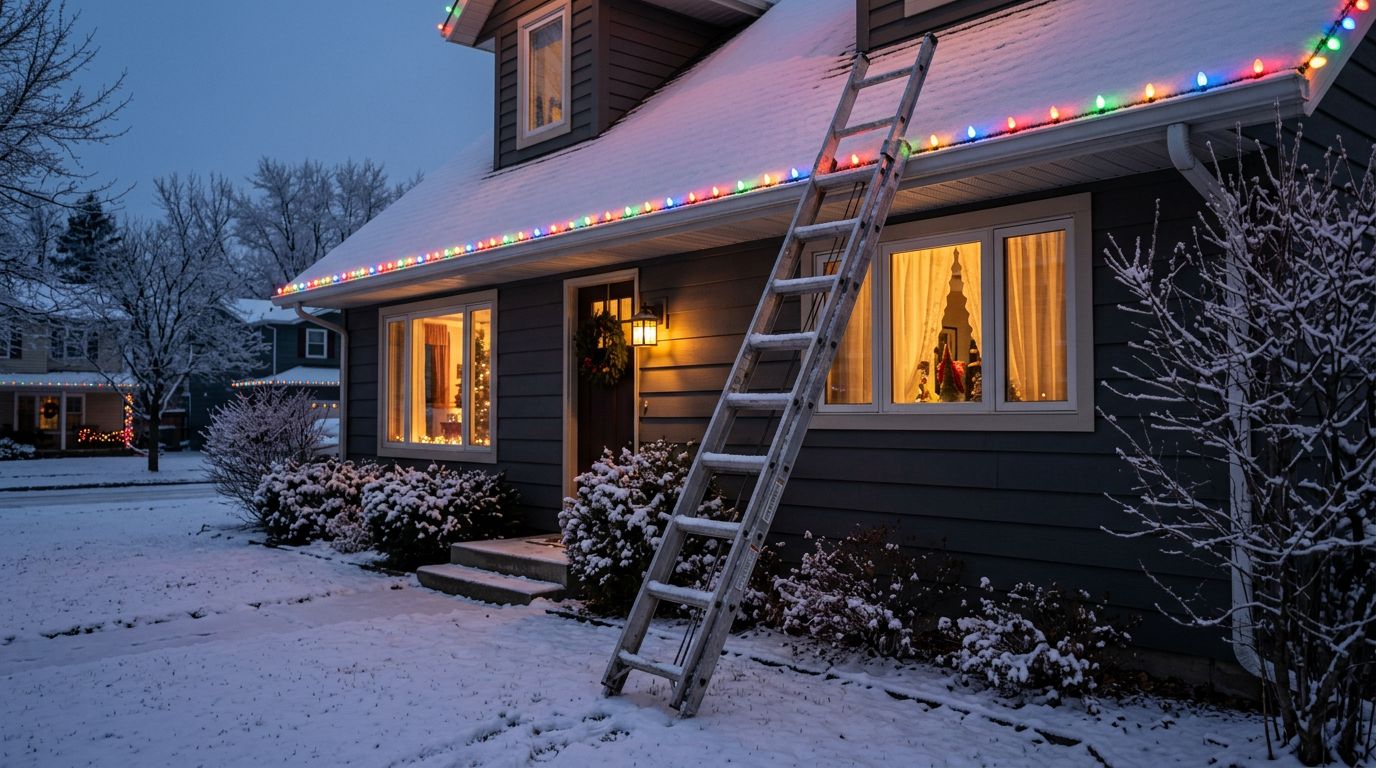
- Inspect the ladder first. Check the rungs, feet, and locks. Look for cracks, rust, or wobble before you climb.
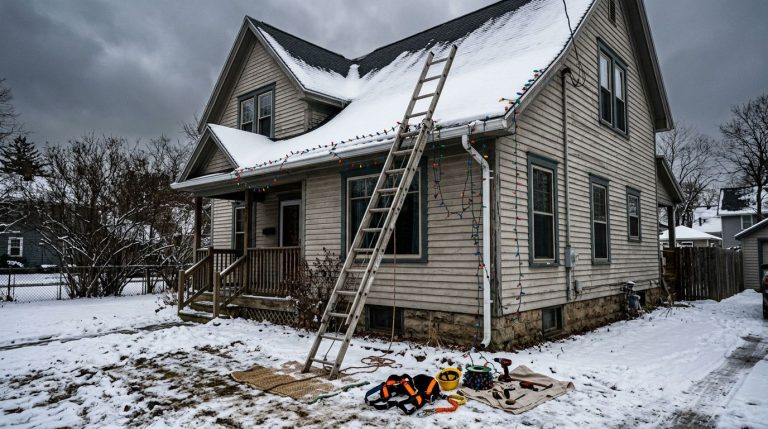
- Find solid, level ground. Never place a ladder on mulch, grass, or ice without a stable base. Use a ladder leveler if the ground slopes.
- Use the 4 to 1 rule. For every four feet of ladder height, move the base one foot away from the wall. This keeps the angle safe.
- Lock the spreaders. On a step ladder, make sure both spreader braces are fully open and locked.
- Secure the top. If possible, tie off the top of an extension ladder or use a stabilizer bar so it cannot slide sideways.
- Have a spotter. Ask someone to hold the base while you climb, especially on windy days.
- Test before you trust it. Put weight on the first rung and give it a gentle shake before you go higher.
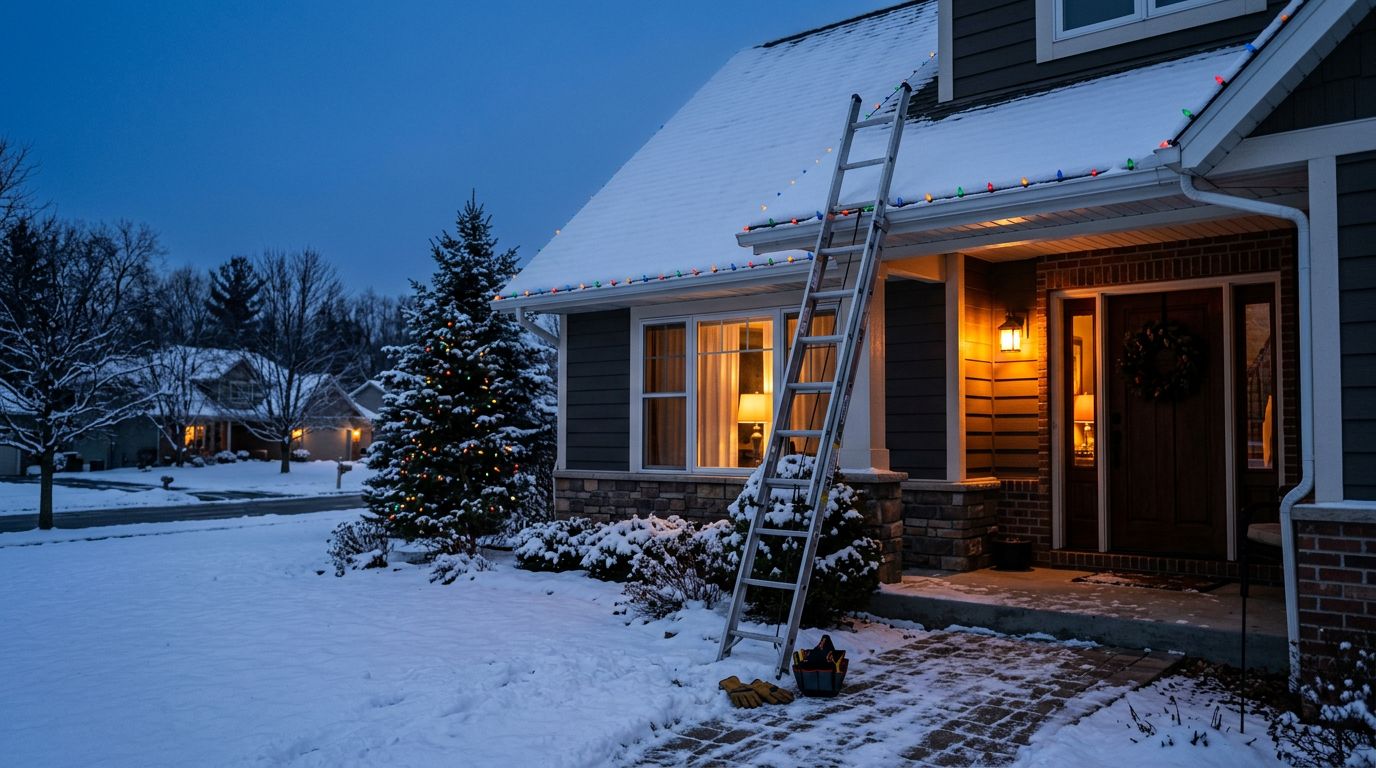
Once your ladder is set, keep your tools within easy reach. A tool belt or bucket hook means you never have to overreach for supplies.
Essential Ladder Safety Tips for Hanging Christmas Lights
The setup matters, but so does how you behave once you are up there. These habits keep you steady while you clip lights and route cords.
Maintain Three Points of Contact
Keep two hands and one foot, or two feet and one hand, on the ladder at all times. That means you never carry an armful of lights up the ladder. Pull them up with a rope or hand them up in small sections instead.
Never Overreach
Your belt buckle should stay between the ladder rails. If you have to lean out to reach the next clip, STOP. Climb down and move the ladder over. It feels slow, but a fall costs a whole lot more time.
Watch the Weather
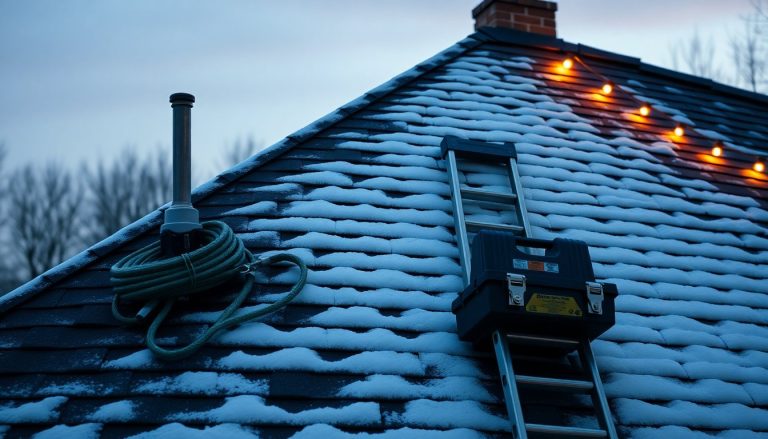
Wind, rain, and ice turn a safe ladder into a dangerous one. In North Texas the weather can flip fast in December. If it is gusty or wet, wait for a better day. Roof frost is especially sneaky in the early morning.
Keep Power Cords Clear
Never let cords dangle where they can catch your foot or the ladder. Test each light strand on the ground first so you are not climbing up and down to fix a dead section.
Mind the Steep Slopes
Steep roof lines add real risk. If your home has a sharp pitch, you may need special gear or a different approach entirely. We cover this in our tips for steep roof Christmas light installation so you know when a job crosses from tricky to dangerous.
Take Your Time
Fatigue leads to mistakes. Climb down and rest when your legs feel shaky. A quick break beats an emergency room visit every time.
Common Ladder Safety Mistakes to Avoid During Light Installation
We see the same mistakes year after year. Most of them are easy to avoid once you know what to watch for. A little awareness goes a long way. Here are the errors that send people to the ground when they should be enjoying the season.
- Placing the ladder against gutters. Gutters bend and crack under ladder pressure. Use a stabilizer bar to rest on the wall instead.
- Standing on the top rung. The top cap and top step are not designed to hold you. Buy a taller ladder if you cannot reach.
- Climbing with tools in hand. This breaks the three points of contact rule and throws off your balance.
- Ignoring the weight rating. Your body plus tools plus lights can exceed a lightweight ladder fast.
- Skipping the ground check. Soft soil, wet grass, and icy patches let the feet slide out from under you.
- Working alone at height. A spotter can steady the ladder and call for help if something goes wrong.
- Using a damaged ladder. A cracked rail or missing foot is not worth the risk. Retire it.
Most of these mistakes come from wanting to finish fast. But Christmas lights are not worth a broken bone. Slow down and do it right.
What Safety Gear Do You Need for Christmas Light Installation
The right gear turns a risky job into a manageable one. You do not need a full climbing rig for a single story home, but a few key items make a big difference. Think of this gear as cheap insurance for your body. Here is what we recommend having on hand before you start.
- Non slip work boots. Good tread keeps your feet planted on the rungs and the roof.
- Work gloves. They protect your hands from sharp clips, cold metal, and rough shingles.
- A tool belt or bucket. Keep clips, cords, and pliers close so you never overreach.
- Ladder stabilizer bar. This add on keeps the ladder off the gutters and widens your base.
- Safety harness and rope. For roof work, a harness tied to a solid anchor can save your life.
- Cordless headlamp. Winter days end early, so good light helps you see cords and clips.
- GFCI outlets or adapters. These protect against shock when you plug in outdoor lights.
Even with all the right gear, some jobs are simply too tall or too steep for a DIY approach. That is where the pros come in.
When Should You Hire a Professional Christmas Light Installer
There is no shame in calling in help. Some homes are just not safe for a homeowner on a ladder. Professionals bring the tall ladders, the harnesses, and the experience to work at height safely. If you are wondering whether it is worth it, take a look at our breakdown of whether professional Christmas lights are worth it for your situation. Here are the signs it is time to hand the ladder over.
- Your home is two stories or taller. The higher you go, the more a fall hurts. Pros have the gear for these heights.
- You have a steep or complex roof. Sharp pitches and multiple angles need special safety equipment.
- You are not comfortable on a ladder. If heights make you nervous, that fear affects your balance.
- You want a synchronized or permanent display. Custom lighting takes planning and wiring skill.
- You are short on time. A crew can finish in hours what might take you a whole weekend.
- You want it done cleanly. Pros hide cords and space bulbs evenly for a polished look.
We serve Watauga, Hurst, Euless, Richland Hills, Colleyville, Fort Worth, Arlington, and Dallas with residential and commercial installs. From simple roof line displays to full synchronized lighting and permanent holiday systems, we handle the ladder work so you do not have to.
Conclusion
Christmas light installation ladder safety comes down to a few smart habits. Pick the right ladder, set it up on level ground, and keep three points of contact at all times. Watch the weather, avoid overreaching, and never work alone at height. The right safety gear adds another layer of protection.
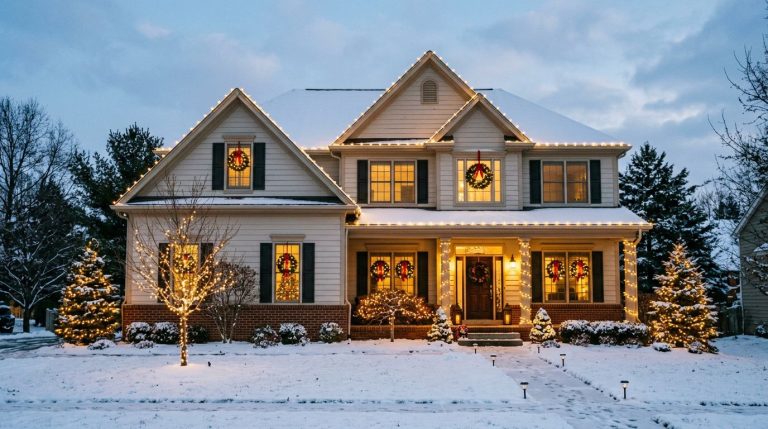
If your home is tall, steep, or just feels risky, let the pros handle it. At DFW Christmas Light Installs in Watauga, we bring the tools, the training, and the care to light up your home safely this season. Reach out today and enjoy the holidays without ever touching a ladder.